Paraprofessionals: Schools growing their own teachers

I was in a school recently and had the chance to chat with several of that school’s paraprofessionals. They are called different names in different systems – paraeducator, teaching assistant, teacher’s aide, classroom assistant – but parapros are, in short, classroom teaching assistants that do not have their teaching certificate. They may be assigned to a single classroom, usually lower elementary, to assist the teacher in that classroom, or they might float between two classes or within a grade level. Some parapros are assigned to assist special education students in a classroom or grade level, and while that is their major responsibility, I tend to see parapros assisting other kids if their help is not needed by the special education student.

Parapros tend to do a myriad of things for the classroom and teacher, from teaching lessons to working with small groups of students to Xeroxing materials for the teacher. I have seen parapros used to substitute teach, when a teacher is absent, and they might oversee lunch, the playground during recess, and the melee that is the beginning and end of each school day.

Let me get back to that school that I was visiting and the parapros with which I talked, for what they told me was very different than what I often hear in other schools: Most parapros at this school were completing coursework and doing what they needed to do to become full-time teachers. They told me that their partner teacher, the school’s principal, and even the district were encouraging them on this path, in some cases the school giving them a little money for the coursework.

As I said before, I have rarely encountered this “grow-your-own” mentality; parapros in other schools that I have visited seemed not interested in becoming certified teachers, for whatever reason, or the school did not encourage them sufficiently to get on this path. To be honest, it always struck me as poor human capital management. Here already were teachers – not officially but they did some of the same work – who knew the school and school system and obviously had an interest in the world of teaching, given their choice to be a parapro. Why, in so many schools, was so little being done to move these educators into the certified ranks, to give the school and school district another pool of teachers?

Colleague David Ginsburg, who runs this consulting and coaching shop, writes this great blog,  and is in many, many schools each year, agrees that “paras should be viewed as potential teachers, and perhaps even hired on that basis if the applicant pool can support it.”

And David made the great point that regardless “whether paras have the desire/time/etc. to move up the ranks, it’s still incumbent on schools to support their professional development in their current positions – especially when those positions are so multi-faceted. A lot of paras have negative experiences in schools because they aren’t set up for success – not unlike what happens with many teachers too, of course – and are less likely to be drawn into teaching as a result.”

Obviously the school that I visited had hired well; it had hired parapros that wanted more than just that role, and it had created a system to ensure that, if they so desired, they could formally become teachers. This group with which I talked could not say enough about the respect they felt from the school and district – and I know, when these parapros get their teaching certificates, that the school and district will benefit greatly from a loyal and very happy new crop of teachers.

I got the school bus image here.

Posted in Classroom, School, School district, Teachers, Teaching | Tagged , , , , | Leave a comment

Ten Cool Things We Learned This Summer

Summer’s a great time for learning. Even the time spent reading the newspaper and talking about front page stories, something that doesn’t happen with regularity during the hustle bustle mornings of the school year, provide rich fodder.

But how do we ensure that summer learning connects back to the classroom and is not left, figuratively speaking, on that New England lake dock or in the corner of a museum that was visited? There should be some formal debrief in each classroom, in a manner that is manageable for the teacher, that lets students share what they learned over the summer, makes it available to peers, and allows students to explore further topics or ideas that sparked an interest. Imagine if each student was given the time to create some kind of online repository – an easy way to share and expand.

Here’s a quick list of ten things that we learned and discussed this summer. What are your ten?

  1. We can’t get Libya off our minds. Even last week, on the walk to school, my son asked, “So who will be the new leader of Libya? One of the rebels?” The front page photographs of the Libyan conflict were dramatic, the stories filled with the back and forth of battle. We talked about dictators, the events in the Middle East and their relationship to the Libyan rebellion, the tribal loyalties in countries like Libya, and the complexities of achieving any sort of democracy out of conflict. No doubt this story will continue to interest our household.
  2. We caught tiny crabs at Atlantic beaches and discussed how some animals – crabs, lobsters, sea turtles, frogs, etc. – have many, many young, although only a few survive. We contrasted this reproductive approach with those animals that have few young – humans, whales, dolphins, cheetahs, etc. – and discussed the energy that these animals devote to parenting those few young.
  3. OK, something that I learned or relearned: How much I love science fiction. When I was in middle school, I devoured Dune, Ringworld, Fantastic Voyage, and the like and had great fun during the last week of summer reading two science fiction novels, Hominids and Seeker. No wonder I enjoyed teaching Ender’s Game to my ninth graders several years ago; I need to go back to that novel and its progeny.
  4. I wanna know more about the inner workings of our Prius, about its ability to toggle seamlessly back and forth between the gas and electric engines. My son and I did a little math on a recent drive and figured out that we used about a cup of gas to go three miles in it this summer.
  5. Weather Underground was a great way to track Hurricane Irene, and we discussed how hurricanes in the northern hemisphere turn counterclockwise due to the Coriolis effect caused by the Earth’s rotation – and that those in the southern hemisphere turn clockwise. We also learned that, typically, tornadoes that form from a hurricane do so in the storm’s right-front quadrant, where the wind shear is the greatest.
  6. Dinner table conversation one vacation evening – yeah, not the most pleasant: The Latin root “cide” has spawned many, many words: fratricide, suicide, matricide, regicide, sororicide, tyrannicide, herbicide, pesticide, infanticide, genocide, etc. Then there is serpenticide (killing of a snake), urbicide (destruction of a city), and giganticide (killing of a giant).
  7. Of the US military academies, the Naval Academy sits on the smallest acreage, just 340 acres, and can only expand by building into the Annapolis harbor, as it has done in the past. In comparison, the Air Force Academy is on about 18,000 acres, the US Military Academy about 16,000 acres. We wanna know more about when the Academy expanded into the harbor – the amount of fill, for example, that was used to turn water into land and the process that that kind of construction takes.
  8. Twin brothers Duane and Dwight Lewis operate the swing bridge that connects Boothbay Harbor, Maine with Southport Island. Dwight has been at his job for 46 years, his brother for 44. This article tells you all about them and their work, and here are two videos of the swing bridge in action, one from the water, another from the roadway. The bridge itself is a remarkable engineering feat, as it swings effortlessly open. Dwight told me that during the day in the summer they now open the bridge on the hour and half-hour; previously it had been whenever an oversize boat showed up, which was “every ten minutes or so,” said Dwight, “and that was gonna burn the bridge’s motor out.” I also think it is remarkable that these two brothers has been on the job for so long. Imagine the changes that they have seen in that part of New England – from an increase in tourism to changes related to fishing and lobstering.
  9. The water of Maine’s Kennebec River, just up from Bath, is an iron color, sort of like Dr. Pepper. The river is the mainstem – a great word – of the Kennebec Estuary, a partly enclosed body of water with one or more rivers that flow into it and that connects to the sea. A transition zone between river and ocean, an estuary is subject to tides, and the mixing of sea- and fresh water fosters heaps o’ nutrients – that Dr. Pepper color no doubt evidence of them.
  10. We learned of the tradition of second line in parades in New Orleans; those in the first line have the permit for the parade – are more official – and those in the second line are there to enjoy the music. They are the ones that carry parasols and dance and have a good old time. Give it a try with this video from the Oakland-based California Honeydrops – enjoy:

Posted in Parents, Teaching | Tagged , , , , , , , , , , , | Leave a comment

“Summer slide” and engaging summer school programs

There was a great piece in a recent Education Week that shared some of the work happening ‘cross the country to ensure that kids don’t suffer from “summer slide,” particularly, as the article stated, “underprivileged students who lack opportunities for enriching and educational experiences.” The article follows a RAND report called Making Summer Count that shared that research “has shown that students’ skills and knowledge often deteriorate during the summer months, with low-income students facing the largest losses. Instruction during the summer has the potential to stop these losses and propel students toward higher achievement.”

What was most intriguing to me about the summer programs highlighted in the article is their current state, with their focus on engagement, relevancy, applicability. In Baltimore, for example, project-based learning showed “students the practical applications of math by connecting the subject to something relevant.” They built robots, used math to craft jewelry, and watched as Olympian Michael Phelps used swimming and race times for a lesson on decimals.

The RAND report concurs with this approach; it concluded that “engaging enrichment experiences were also part of a quality program, as summer learning should feel ‘different’ from school-year instruction.” Summer school “providers achieved this goal both by providing enrichment experiences (e.g., fencing, kayaking, swimming) and by designing or selecting academic curricula that differed from that offered during the school year. In Pittsburgh, for example, the curriculum included the use of several different board games and other activities.” In its second year Pittsburgh’s program is called Summer Dreamers Academy, and it’s a five week academic and enrichment program for 5000 students that’s focused on mathematics, reading, and social skills. In Washington Township Schools in Indianapolis, its two-week summer program is called Learning Under the Sun and is full enrichment, as this article shared, “an opportunity for students to spend time in the summer continuing their education, but with greater emphasis on hands-on activities they don’t usually receive in a structured school-year curriculum.”

In this time of tight school district budgets, it’s good to see that some districts are committing money, time, and personnel to summer learning opportunities. The RAND report shared that in Pittsburgh, “four year-round coordinators reported working 60 hours per week during the school year and 80 hours per week during the summer to start the program.”

But why is it that summer school needs to be “different” from the regular school year, as the RAND report stated? Or better put: Why is the regular school year so different from these summer programs? There’s the suggestion that a summer program needs something darn interesting to capture the attention of its students – and that’s not true from September to June? A friend whose son just finished a week-long music camp confided that his son stated to him (and I’m paraphrasing): If the real school year were like this past week at camp, I’d be up and out of the door each morning before you and Mom.

When the school year starts, let’s not forget what makes most summer programs so engaging for students: hands-on, project-based, real-world work. And while it may not be true for all summer programs, those that are held up as high quality programs can engender deep learning in their participants. In the article on the Washington Township program, one teacher helped her students build roller coasters and observed the following about them: “’They’re already thinking at that higher level. They’ve already thought of what steps to take to make it successful, what variables are involved to make things work…They know that mass is going to matter.'” Important realizations for students to make in any science class – whether it happens in the summer or during the school year.

For more information on summer learning, see too the National Summer Learning Association. The sun image came from this high school’s site. The other two pics came from the Pittsburgh Public Schools’ Summer Programs site.

Posted in Classroom, Federal policy, School, School district, Teaching | Tagged , , , , , , , | 1 Comment

End-of-school rituals, school reunions, and school culture

Emerging from the Bridge of Years

Back in this post on school culture, I shared Craig Jerald’s five sets of behaviors that “send strong signals” about a school’s “vision and values” – about its culture – and rituals were his first set of behaviors: celebrations and ceremonies, rites of passage, and shared quirks and mannerisms. About two weeks ago, my son’s elementary school finished with one of its own rituals, called the Bridge of Years. It happens the last day of school. Students from kinder to grade four line up on either side of the walkway in the school’s front, with the kinder kids nearest the school’s front door, the fourth graders at the other end. They all raise their arms and hold hands forming a tunnel over the walkway. The school’s fifth graders then exit the school and duck through this human tunnel, squeezing through the smaller kids at the start, the tunnel getting bigger as they proceed, reminding them, as one parent friend told me, “of how they’ve grown during their years” at the school. A lovely and powerful ritual.

School reunions are another kind of year-end ritual, and two weekends ago I attended my 30th college reunion. Yes, I know: I’m ancient as a redwood. That said, it was a wonderful three days, and I was able to catch up with many friends/classmates. Certainly, any reunion is itself filled with rituals: At mine we heard (and some sang) familiar songs, visited iconic spots on campus, and shared often-told stories. The undergraduates who were on campus to work at the reunions were very patient with us. They were also an important participant in the weekend, as we shared our experience with them, preparing them for their own every-five-year gathering after graduation.

It got me thinking about reunion events at the K-12 level, when alumni come back near or at the end of the school year to celebrate and be celebrated. Some high school reunions are far more elaborate than others. Many independent schools put on weekend-long gatherings, with events and meals and ceremonies, much like my college reunion. Others are more low key. My Connecticut high school has a reunion dinner for our class every five years, on the Saturday after Thanksgiving, hoping to catch out-of-town folks when they’re back visiting family.

Yes, my high school mascot is a green dragon

Schools, no matter the grade level, should do what they can to encourage a reunion ritual. Whether it’s taking part in a year-end event such as the one that happens at my son’s school or spending a full weekend on campus, one filled with activities and former classmates, reunions ensure the longevity of a place, building on and transmitting to all participants a school’s culture. Think of the kinder kids involved in the Bridge of Years event and the undergrads that we met at my reunion: They are a ways from being the center of those rituals, but by taking part in it, they learn that ritual and prepare to transmit it to others. In fact they’re already transmitting it, as they go back to their peers and tell them of what just happened, widening the news and influence and magic of that school ritual even more.

Thanks to Erica for the Bridge of Years pic. I got the image from Baker Library here. I got the Hamden High School emblem here.

Posted in School, School district | Tagged , , , , , , , | 1 Comment

The lure of programs

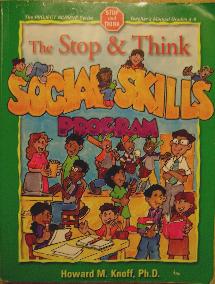
I heard a principal talk the other evening about installing a new program at her school, Project ACHIEVE’s Stop and Think, a social skills program. My ears perked up. Generally, I’m suspicious about programs and their effectiveness. So much is dependent on fidelity of implementation.

First, let me define what I mean by”program.” I see it as any out-of-the-box set of curriculum or lesson plans or the like that a school or district can purchase and institute at the school building, at times with accompanying professional development for teachers and school administrators. For example, programs focused on curriculum and instruction include FOSS Science Kits, the Saxon products, and various Zaner-Bloser products. There’s much stuff out there, some better than others. It’s big business, as you might imagine, as education companies vie to sell their wares to the 40,000+ school districts ‘cross the country.

Why might folks at a school institute a program, rather than develop something themselves? They might not have the expertise, for example, or the time to spend on development. A school might decide that, after careful examination, a program is much better than anything that the school building can develop. And school districts have been known to institute programs district-wide, and so schools need to follow the district’s lead – not ideal, obviously, but a reality.

Think of a program as a kind of out-sourcing.

Sure, there are times when instituting a program can help a school building rather significantly. Several years ago, when working with a set of highly dysfunctional elementary schools, a colleague helped me see the importance that a curricular/instructional program might have for those schools. “They’d help stabilize instruction,” I remember him saying. These schools were so out-of-whack that teachers were doing whatever they wanted, from classroom to classroom, from grade level to grade level. An appropriate program, if well implemented, would install some consistency to the school’s instructional practices, even if it seemed cookie-cutterish. Once some best practices were established, the school might then work to develop its own best practices, its own systems, and slowly phase out that program.

It’s that cookie-cutter potential and the poor selection of programs that raise my suspicions. For the most part I believe that schools, their teachers, and their building leaders know what’s best for their kids and their practices at those schools. Well chosen, an off-the-shelf program supports the vision that teachers and principals have for their school. Badly chosen, a program is an aberration to the school day, the school year, even the school culture on which those at the school might have worked. Schools discover that they chose badly, the program gets poorly implemented, and it is quickly shelved, money for it down the tubes.

So, what are good questions to ask when you hear that a school’s about to implement a program?

  • How was the program chosen, and how does it align with the school’s and school district’s priorities?
  • Will it be piloted first, maybe with one grade level, or rolled out all at once?
  • What professional development will teachers get so that they can implement it with fidelity?
  • What is the principal’s role with implementation?
  • How will the program’s effectiveness be measured, and how will implementation reflect the data collected?
  • Is the program permanent, or will it be used to build capacity at the school and then be slowly phased out?

Just a few questions – what others do you have?

I got the Stop and Think image here.

Posted in Classroom, Principal, School, Teachers, Teaching | Tagged , , , , | Leave a comment

“Look fors” in effective classrooms

A friend (and parent) and I got talking about this the other evening: Imagine you’re moving to a new state, a new city, but before you decide on a neighborhood and therefore a school for your kids, you want some sense of your choices. You want to kick the tires a bit: Get into school buildings and observe some classes, to get a sense of just what each school is like, at the classroom level. Sure, there are other things to consider, such as the school culture or the building leader, and obviously a visit of a few minutes to any classroom will only tell you so much. But knowing the limitations of that sort of visit, just what are some “look fors” that might suggest an effective classroom? Here are a few ideas.

1. The teacher both leads the class and allows kids to lead it. I’ve written about this before when I wrote about the flipped classroom: I believe that effective teachers move naturally from teaching to guiding, from speaking to listening, from themselves to their kids. They’re not always the locus of control and are more than willing to cede that control to their charges – in fact, that’s what their working towards each school day. How do you know that’s happening, when you just have a moment or two in a classroom? Ask yourself these questions: Is the teacher asking questions that cause kids to think and talk among themselves? Are kids asking the same sort of questions, not just of the teacher but of their peers? Is there a sense that the class is, as Douglas Barnes wrote, “preparing young people for a complex world with many uncertainties and many occasions when rational choice is” required? “In such a society” he continued, “we need people who can think for themselves, and make informed judgments.”

A mimeograph machine

2. To continue on this idea of questions and talk in the classroom: It should feel very alive. Is there a buzz in it? Are kids on task and working together on schoolwork, not gabbing about the latest Lady Gaga video? Are students up and moving around? Is there a little chaos in the room – noise, movement, laughter? For me the deadliest classrooms are those that have kids all in rows quietly filling out worksheets. An occasional hand might shoot up with a query, but that’s the exception. A caveat: There are times when students need to work on their own, quietly at their desks, with the teacher floating around. But you’ll notice a difference between this kind of work and worksheet deadliness. In worksheet-driven classrooms, there’s a smell in the air, like that of mimeographed copies.

3. The classroom is organized. Yes, I know: I tend to like more messy classrooms, places that feel lived in, with aquariums gurgling in one corner, the classroom bird chirping in the other. But think of Frank Gehry’s Guggenheim Museum Bilbao: Beneath all those wildly flowing curves is a critically important superstructure, holding it together. The classroom is the same; it needs to be well organized. For example, is there an agenda somewhere in the room, so that kids know what’s in store that day, from one block of time to the next? See examples here and here. Has the teacher posted the objective for the lesson, usually written as, “The student will be able to…”? And does the teacher refer to it? Has the teacher posted the state standards on which that lesson focuses? Do you get the sense that the teacher’s referring to a lesson plan? Is there evidence of some kind of classroom behavior management plan, to help kids navigate appropriate choices in the classroom and not so appropriate choices? All of these markers show an important organization.

A word wall example

4. Does the class look inviting? Student work should be on the walls, with rubrics or guides that tell how that work was marked. No matter the subject area, the classroom should be print-rich, with a book nook or library and with vocabulary words up on the walls – what are called word walls. I was in a school recently where vocabulary words dangled from the classroom’s ceiling. Are there colorful and relevant bulletin boards in the class, with recent stuff up, even ones that students created? And how about the class not just looking good but sounding good? I love teachers who play Bach or Mozart or Macy Gray as kids move from one activity to the next.

5. The teacher differentiates for her varied learners. I had this post about differentiated instruction last October. Feel free to reference that. In short, as you watch a classroom, do you get the sense that the teacher is aware of different learners and is modifying her instruction to accommodate those differences? In some manner this gets back to that chaotic classroom, as students in a single classroom might be engaged in multiple activities, all to get them to the same learning objective. See more at Differentiation Central.

6. Lastly, friend Susan Hayes, who’s at WestEd’s Northeast Regional Resource Center and also a parent of a burgeoning drummer, had this to add: Is there “trust in and fondness for the teacher?” She continued: “Do the students seem to actually like the teacher? Is she warm and kind to students? Is there mutual respect? Are both students and the teacher smiling? Laughing? Do they really seem to know and enjoy each other?” Not an easy thing to measure during a quick classroom visit but so critical. As former colleague Lisa Johnson wrote in this paper, “Educators would do well to consistently recognize that teacher support and adolescents’ sense of school membership are important factors associated with learning and motivation.” I remember my high school physics teacher Mr. Jacobs – one of the toughest teachers I ever had but always with a smile, a pat on the back, a short nod that told me I was on the right track but needed to work a little harder. And I did, for I knew he cared about me and my classmates very much.

So, a few ideas. What am I missing?

I got the map here. The word wall photo came from this site. The mimeograph machine photo came from this blog.

Posted in Classroom, Parents, School, Teachers, Teaching | Tagged , , , , , , , , , , , , , , | Leave a comment