The Dos and Don’ts of Back-to-School Night

back to schoolA quick Friday post – and much thanks to my parent peeps that helped with the below:

1. Don’t ask us to fill out a handout that asks questions such as, “Is there anything that you’d like to share with me about your child?” Are we supposed to be listening to the teacher during the short time that we’re in the classroom or filling out this sheet? If a teacher really wants this info, send it home with us, so that we can do a thoughtful job.

2. As one parent said to me about these kinds of evenings, “I want to leave excited about the learning that’s happening, not about the mechanics.” And so don’t spend time talking about grading policy. That’s no doubt somewhere on the school’s or teacher’s website. When teachers spend time on this topic and not on an excited-about-learning topic, a clear message is sent to us: Grades are more important than the teaching and learning.

3. See above: Do spend time talking about one topic or unit that you love to teach or that’s a linchpin to the year. I love seeing a teacher get excited about hydroponics or the Black Death or Tom Sawyer. For me, teacher excitement translates to student excitement.

4. Using Powerpoint for the presentation to parents? Don’t use more than three slides. Often parents are in individual classrooms for 10-15 minutes, and a litany of text-heavy, hard-to-read slides – well, you catch my drift.

5. Do tell us about yourself but don’t spend time on credentials. I like knowing about the volunteer work that teachers do or about their own kids that went through this very same school. Share that with us, not where you got your BA or MA. As a friend said to me, “It gives us a way of feeling connected [to the teacher].”

6. Do focus on student outcomes – that is, what is it that students in your class will know and be able to do at its end? Now, see above: No dense PP slides, with language from dense, parent-unfriendly Common Core standards. How about just a few important skills that will be learned or knowledge that will be gained? In fact, a parent and friend told me how one teacher shared a video of students talking about what they’d learned so far in the class. As my friend said, “It was a great way to see in action what these kids are taking away from her course.”

7. Do be organized. Spending time handing out handouts, when they should be available to parents as they walk into the classroom or on desktops, or not having enough of them tell me: Poor planning. Is that, then, how class is run?

8. Do let us talk. Yes, there are only 10-15 minutes. Yes, there’s a lot to cover. But again, see above: Cover less, talk less, and let parents ask questions and discuss. Yes, I know that this approach can go south quickly, with one parent potentially dominating what little time there is. But I much prefer this interactive approach, as risky as it might be, compared with the talking-at-us-very-quickly-for-15-minutes approach.

9. Don’t forget little things. The basket of chocolates. (Ask the PTA to spend some money on that.) A Xeroxed copy of a poem students might study during the coming year. (Have a parent read it aloud and get reaction.) Those little squares of paper that let us write a note to our kid, to leave on his or her desk the next day – even if they’re in middle or high school. Yeah, they might be six feet tall, with feet like canoes, but to us they’re still snug in that Baby Bjorn or helping to mow the lawn with a small plastic toy mower as they make the sound “rrrrrrrr.”

Posted in Classroom, Parents, School, Teachers | Tagged , , | 2 Comments

Grumpy Middle School Dad & Thoughtful Middle School Dad

children_walkingA hypothetical conversation. You watch: The thoughtful guy will win out, I know.

Thoughtful Middle School Dad: Why the…um…grumpy face?

Grumpy Middle School Dad: My kid – just driving me crazy.

TMSD: (face set in mock horror) No! Really?!

GMSD: Gimme a break, huh?

TMSD: Well, remember: He’s in 7th grade. That’s part of the deal. Clothes all over the floor. Forgets to bring labored over homework or projects to school on the due date. No sense of time, like being ready for the car pool car or getting back from the swimming pool in time for dinner. Remember this doc from the California Department of Education that outlined some of the intellectual, physical, social, psychological, and moral/ethical developments in middle grades kids? Just look at the first item in the list under psychological changes: “Are often erratic and inconsistent in their behavior.”

GMSD: Yes, Mr. Smarty Pants. I remember. And, yes, I know about the inconsistencies. But they still drive me crazy. The flitting from one idea to the next.

TMSD: Well, again, take a look at that list. Look at the intellectual development list: “Are intensely curious.” That’s a good thing, yes? Middle schoolers need to be given the space to explore and test and play with new ideas. Sure, not all will take hold…

GMSD: But when will they? The trail of detritus from the last year – of new ideas and pursuits discarded after a brief fling – it’s like the floor of his messy room.

TMSD: You seem to want him to emerge fully formed, to latch on to something that will be his passion for the rest of his life. So, that was true for you, huh? Remember that silly face and the blocky “zap!” that you drew all the time in middle school, that you bequeathed to the school when you left for high school?

Yes, 40 years later, I can still draw this idiocy.

Yes, 40 years later, I can still draw this idiocy.

GMSD: (sheepishly) Yes, I remember.

TMSD: You spent a lot of time on that sort of stuff – and did you go into a graphic design line of work? Thank goodness, no – but I bet it was fun to draw, as well as all the stock cars and World War II era tanks you drew. And remember your model car phase…

GMSD: (quietly) Yeah, I built maybe one and a half…

TMSD: But that was all right. That was you experimenting, playing – just like your middle schooler now. Listen to what Dr. Jay Giedd at the NIH has to say about the adolescent brain during the time of middle school, as the frontal lobe grows explosively:

The frontal lobe is often called the CEO, or the executive of the brain. It’s involved in things like planning and strategizing and organizing, initiating attention and stopping and starting and shifting attention. It’s a part of the brain that most separates man from beast, if you will. That is the part of the brain that has changed most in our human evolution, and a part of the brain that allows us to conduct philosophy and to think about thinking and to think about our place in the universe…

I think that [in the teen years, this] part of the brain that is helping organization, planning and strategizing is not done being built yet … [It’s] not that the teens are stupid or incapable of [things]. It’s sort of unfair to expect them to have adult levels of organizational skills or decision-making before their brain is finished being built.

TMSD: Let me read that again for me, will you? “It’s sort of unfair to expect them to have adult levels of organizational skills or decision-making…” Yes, it’s important to remind these adolescents of responsibilities, to set up consequences when they’re not met, to help guide the maturation of the frontal lobe – but don’t get all huffy when it doesn’t always work.

aaaGMSD: (huffily): I don’t get huffy.

TMSD: (non-huffily): You get huffy. And, like I said, it’s not always gonna work for him – or for any middle schooler. And so help him learn from mistakes and hop right back on the horse that is his frontal lobe. And as he develops interests, feed those interests. Again, his brain wants to try a bunch of new stuff and will, at some moment, begin to winnow. Here’s more from Dr. Giedd, on that all-important sculpting that comes after the building up:

I think the exuberant growth during the pre-puberty years gives the brain enormous potential. The capacity to be skilled in many different areas is building up during those times. What the influences are of parenting or teachers, society, nutrition, bacterial and viral infections – all these factors – on this building-up phase, we’re just beginning to try to understand. But the pruning-down phase is perhaps even more interesting, because our leading hypothesis for that is the “Use it or lose it” principle. Those cells and connections that are used will survive and flourish. Those cells and connections that are not used will wither and die…

Right around the time of puberty and on into the adult years is a particularly critical time for the brain sculpting to take place. Much like Michelangelo’s David, you start out with a huge block of granite at the peak at the puberty years. Then the art is created by removing pieces of the granite, and that is the way the brain also sculpts itself. Bigger isn’t necessarily better or else the peak in brain function would occur at age 11 or 12…The advances come from actually taking away and pruning down of certain connections themselves.

chalkGMSD: So I’m just struggling ‘gainst Mother Nature…

TMSD: Yeah, to some degree – but don’t cave. As Dr. Giedd writes above, there’s much that parents and teachers and coaches can do to guide adolescents and their brains as they mature. As he says, “It’s a time of enormous opportunity and of enormous risk. And how the teens spend their time seems to be particularly crucial. If the ‘lose it or use it’ principle holds true, then the activities of the teen may help guide the hard-wiring, actual physical connections in their brain.” What an important moment, then, these middle school years – and what an important influence adults can have. You can’t forget that.

GMSD: My brain hurts…

TMSD: Now you know how he feels.

Posted in Parents, School, Teachers, Teaching | Tagged , , , | Leave a comment

Remembering important teachers, part 4

new-orleansThis post is from Elena Juris, the Deputy Director of the National Institutes of Health Training Center and the author of Positive Options for Reflex Sympathetic Dystrophy. And hooray for New Orleans!

Ms. Landry was my 7th grade English teacher, unlocking a world that I carry with me today. Now, when I occasionally consult on clients’ writing or edit my team members’ memos, I wonder how easily I would express myself if I hadn’t received a strong foundation from a demanding instructor.

Ms. Landry seemed out of place at our New Orleans school, back in the late 80s. She presented a less-than-bubbly demeanor, a ringless finger, dark-colored unisex clothing, and a long, dark ponytail. Her life was shrouded in mystery to us students, and it was said that she lived in the turret of an old Creole mansion. She was not someone I wanted to emulate socially, per se. And yet I watched her from afar, because she knew something important and was calmly confident in it. By the end of the year, she was going to make sure we knew it, too.

Ms. Landry never played favorites. Instead, she was persistent with each of us as she exposed us to the rules and exceptions of English grammar. One of the most memorable moments of my Landry education was her foreboding warning that she would personally call each of us at home to ask for us, ensuring that we fully understood the predicate
nominative. We’d each be expected to answer her inquiry with the correct “This is she,” or “This is he.” We shivered with anticipation, imagining our telephone lines connecting directly to her turreted room on some unexpected evening. And sure enough, one night she called. We never knew when it was coming. We each were ready and never dared make a mistake.

Ms. Landry taught us the hidden pieces of the English language, with their tangled roots and prefixes, suffixes and name references to Greek and Roman sources. As schoolchildren steeped in Mardi Gras, we collaborated on a class project called “Mythology is Everywhere,” which tied the local parade krewes of our daily, colorful lives to the major Greek and Roman figures and stories. This blew my mind, this combination of old and new meaning intertwined with the same symbols; suddenly everything seemed to be secret language and history underlying our current rituals.

I’ll never know if Ms. Landry remembered me, and she never was overwhelmingly warm. Instead, I respected her and her diligence; she stood by her word and enforced high expectations upon the class throughout the year. Since then, the English language has intermittently “saved” me, thrilled me, provided me with travel-work opportunities and a communications and teaching career (for some time). Sometimes, I can feel my own Ms. Landry alter-ego coming out – when I “geek out” on an obscure word etymology or see similarities across other languages I’ve since learned. Either way, she handed me a key to an intellectual world that I was lucky to have visited at such an impressionable age. Hopefully, there remains room for these types of demanding instructors in our current school systems.

The New Orleans image came from here.

Posted in Classroom, School, Teachers, Teaching | Leave a comment

Remembering important teachers, part 3: Ms. Fair

The Herring Building @ Friends

The Herring Building @ Friends

Emily Auerswald and Steve Soden, siblings who are six years apart, were both fortunate to attend Friends Academy in Dartmouth, MA in the late 1980s and early 1990s. They fondly remember a legendary history teacher, Ms. Fair.

Emily: One of my main memories of Ms. Fair – aside from her apt name – was the Middle Ages unit. Did you have that? It was terrific – learn different facts and do projects to move up the ranks from serf to King (or Queen, as the case may be). I clearly recall creating the “princess hat,” as I called it. I made a fabric-covered conical hat that was akin to the fairies’ in Sleeping Beauty. While I thought that this should have earned me the highest grade possible – it was a thing of beauty – I was given a lesser grade because of historical inaccuracy. In the same unit, at the highest level, a classmate made an intricate model of Versailles. You could peek in the windows and see the Hall of Mirrors! This student, too, was downgraded – the assignment had been to construct a model of a castle. Versailles is a palace, and these are not the same thing, at all.

So here we have the bar set high, and in middle school, no less. It was not unkind of her to give us a lower grade for inaccurate work – it was actually helping us learn. To this day, I can describe the difference between a palace and a castle. And I’m much better at following directions. Getting the answer wrong was not a thing of shame but a chance to strive towards that bar.

Steve: More than any of the individual assignments, I remember how she treated everyone fairly. There were no favorites, as you mentioned above, and the assignments were graded based on the grade the assignment deserved. Interestingly, and not surprisingly, now that I’m a teacher myself, she never felt the need to explain to us that she cared about us or wanted us to do our best. The way she went about her work said it all. We could tell that she cared deeply about our knowledge and understanding of the material because, as you explained, she graded it, not us. If we could do better, she expected it of us. Hence, she cared about our development. Her grading, while sometimes tough, was never really open for debate; there was never any room for debate, because to argue against getting marked down for historical inaccuracy in history class would be an exercise in futility. She worked hard to make us better, which showed us that she cared.

Emily: Now that it seems like parents – and students – are more willing to argue grades, do you think that her approach can still be successful? Or would this just be the teacher beating her head against the wall?

Steve: Good question. I have to say that I don’t really get grade arguments, and my style is similar to what she used. In my estimation, kids and parents argue about grades when the grades are not well explained or if the kids think their complaints will work. Ms. Fair did a good job of leaving no wiggle room in her explanation. If she took off points for historical inaccuracies, there wasn’t really any room for discussion. Parents want high marks, and many will complain, but they will typically not do so if the teacher is competent, covers his or her bases with good explanations of grades, and clearly cares about the kid. The last point there is actually the most important. Ms. Fair very clearly cared about her students, so those grades were always given for the work. There was no wiggle room there, which was a reflection of her cache with students and parents.

Emily: I have only had one aggressive case of parents arguing a grade. Their 9th grader turned in an essay that did not answer the question posed. Even he acknowledged that. It turned out, however, that the parents had had, shall we say, a very heavy hand in the writing of the essay, so their argument was not actually about whether or not the essay addressed the question, but about the fact that they each had an English degree from Princeton and should have scored better on a 9th grade English essay. Ahem.

So, aside from isolated cases like this one, I think you’re on to something: “Parents want high marks, and many will complain, but they will typically not do so if the teacher is competent, covers his or her bases with good explanations of grades, and clearly cares about the kid.”

Steve: My final thought in all of this is that at the time, Ms. Fair didn’t seem extraordinary in any way. She did what good teachers do: She separated what she thought of the student from his or her performance, held the student to high standards, and truly cared about the student as a person. She was utterly competent and confident, but more than anything, I think she had a great deal of empathy. While she was never touchy-feely in her approach with me, that’s because she knew me and knew what I needed in order to learn. She “individualized” her instruction before it was a buzzword.

I got the above image here.

Posted in Classroom, School, Teachers, Teaching | Tagged , , | Leave a comment

Remembering important teachers, part 2: It’s all about the food!

Here are recollections about important teachers from my friend Isabel McLean, who’s a lead instructional coach at Albemarle County Public Schools in Virginia. See Isabel’s blog here.

As the new school year begins, it seems the right time to reflect on classroom teachers that have impacted me positively. It’s incredibly hard to choose just one teacher to write about and the ones who I had the most memories of are my primary school teachers. I find it challenging to remember the secondary teachers – perhaps because we had so many during one school year?

In fact, it is far easier to remember the teachers who impacted me negatively – the teacher who had me write a long and boring report on every president in the 4th grade or the middle school geometry teacher who punished me for looking on a friend’s test paper rather than recognizing that the math was confusing and I needed help. While I remember them negatively, they taught me valuable lessons about what NOT to do in the classroom.

Two primary teachers stand out to me, mostly because of the cooking that we did in their classrooms!

I remember Mrs. O fondly, my pre-school teacher and the mother of one of my brother’s friends. I absolutely loved her name and cooking in her classroom and remember making pink icing and spreading it on top of graham crackers. Here’s the recipe:

  • 9 cups powdered sugar
  • 3/4 cup milk
  • 2-3 drops red food coloring
  • 1 box graham crackers

The iced graham crackers looked like this, except pink:

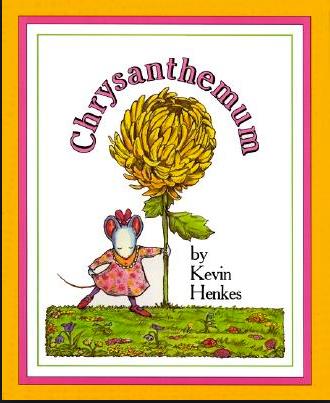
crackerYum. And I loved cooking with Mrs. West too, my 3rd grade teacher. She was beautiful and kind, and her boyfriend rode a motorcycle. She probably was a little like the teacher in the book Chrysanthemum by Kevin Henkes, Delphinium Twinkle.

bookMrs. West taught us how to make soup with Thanksgiving dinner leftovers, and the recipe, as best I can recall, went something like this:

Mrs. West’s Turkey Soup

  • Leftover turkey
  • Chicken broth
  • Frozen corn
  • Frozen lima beans
  • Chunks of potatoes
  • Slices of carrots

It was delicious and simple, and I asked my mom to make it over and over again when I was little. To this day, I still make Mrs. West’s Soup in the fall and winter.

As I think back to the teachers I loved and remembered, they both made a personal connection with me – most often through food! Mrs. O taught us about pink icing and graham crackers, and Mrs. West shared ideas about soup and Thanksgiving leftovers. The food created lasting memories for me that are pleasant and comforting. Are those the teachers we tend to remember? Are they memorable because of the special moments or experiences they created? What are your thoughts? Why do you remember some of your teachers?

Posted in Classroom, School, Teachers, Teaching | Tagged , , , , | Leave a comment

Remembering important teachers, part 1

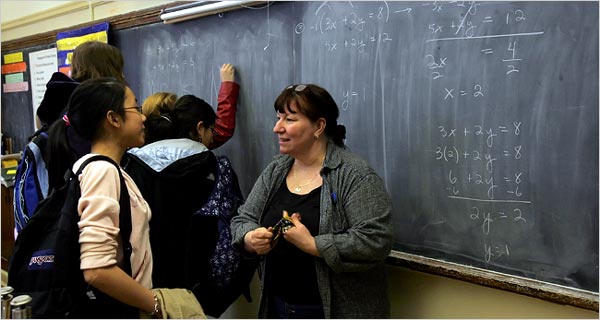
calculusAs a sort of end-of-summer, getting-ready-for-school series, I asked friends to tell me about a teacher that they had sometime during their K-12 tenure that made a positive impression on them – an impression that’s lasted, for whatever reason. Here’s my first entry, from my former college roommate and always great friend, Mike Steinharter. I think we all had a Mrs. Breyer.

At my age, I’m lucky if I can remember my college professors, but I do remember one high school math teacher who somehow captured my imagination and led me down a path. It’s been so long I’m not even sure I remember her name, but I can picture her like it was yesterday.

Mrs Breyer (I think) was so smart and crisp in how she dealt with us and with the material. She had a way of explaining calculus so that it was straightforward. I got it, first time, all through the year, and it made me realize that I was pretty good at math. She was patient yet impatient at the same time – patient explaining math principles but with no tolerance for those in class who wouldn’t invest the time, energy, and attention to do it properly. I don’t have memories of her fawning over any of us who battled for top spots in the class, and I don’t even remember a lot of positive encouragement, yet somehow if she said, “Well done,” it meant more than any of the feedback you might get from other, perhaps less committed teachers, when you did no more than try hard.

I went on to study math in college, mostly because Mrs Breyer made me realize that I was good at it. I never showed interest in a deeply mathematical profession; I was too social for that, but the grounding I got from her teaching is still with me, and when I teach during my volunteer work for Junior Achievement, I find myself wondering whether or not I conduct myself as well as Mrs. Breyer would and whether or not she’d be proud enough of me to offer a “well done.”

I got the above image here.

Posted in Classroom, School, Teachers, Teaching | Leave a comment